Collection
Trading card collection tracker.
Use one TCG collection tracker to see what the portfolio is worth now, which holdings carry the value, and how those prices move over time.
 DownloadApp Store
 Store Link PendingGoogle Play
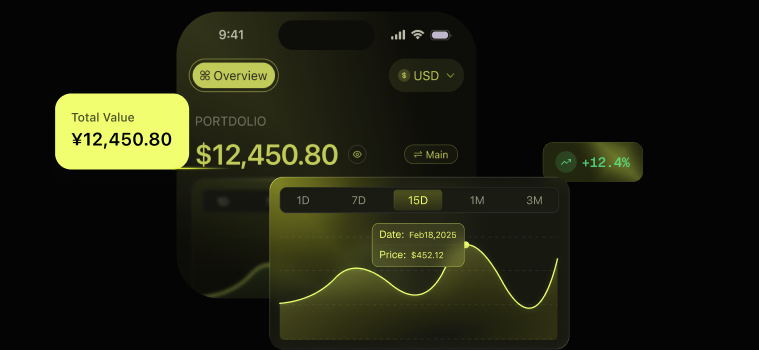
See holdings and current value in one portfolio.
The collection tracker answers value and performance questions: what the portfolio is worth, which cards contribute most, and how prices move. Use the digital card binder when the job is searching and organizing the inventory itself.
Illustrative Card AI screen composite. Values shown are examples; market prices, history, and sold-listing availability depend on the selected card.
A collection becomes useful when it becomes a portfolio
A list can tell you that a card exists in a box. A collection tracker answers the financial question behind that list: what the confirmed holdings are worth together.
Cards enter through scan or catalog search, then contribute their available current price to the portfolio total after you confirm the relevant printing and grading state. That makes the same page a trading card portfolio tracker without turning inventory organization into a second competing owner.
Valuation keeps each holding distinct
- Each entry is linked to a catalog card with its set and card number
- Finish and language are confirmed when the entry is added
- Raw copies carry their condition; graded copies carry the grading company and grade
- Identical copies can use quantity, while different conditions, finishes, languages or grades remain distinct entries
Price history explains the portfolio movement
A current total is only the latest point. Card AI keeps available price history on individual cards, so you can separate a collection-wide move from one valuable holding changing sharply.
That makes the page a portfolio tracker rather than another catalog view: it is organized around value, contribution, and change over time.
Related
Card collection tracker questions.
What should a card collection tracker app keep separate?
It should keep distinct printings, finishes, languages, raw conditions and existing slab grades as distinct holdings. Card AI links each entry to a confirmed catalog record, while the digital card binder handles inventory search and organization.
Can I track duplicates of the same card?
Yes. Copies are stored as separate entries, distinguished by condition, finish, language and grade, so two copies of the same card in different states are tracked and valued independently.
Does the collection value update on its own?
Yes. The total reflects current market prices for the printings you own and moves as those prices change, rather than holding the value from when you added the card.
Can I add cards without scanning them?
Yes. Search the card catalog by name, set or card number and add a matching record directly.
Is this a card collection app or a collection manager?
Both descriptions fit. As a card collector app it catalogs what you own; as a collection manager it tracks condition, grade, quantity and value per entry. The distinction matters less than whether the records are tied to real printings, which they are.
How is card collection value calculated?
Each entry is priced on its own printing and condition or grade, and the card collection value is the sum of those. Because entries are tied to real printings, the total moves with the market instead of holding the price from when you added the card.
Does it work as a TCG collector app for a single game?
Yes. The collection filters by game, so it works as a TCG collection app for one supported title or as a single tracker across supported TCG and sports-card categories.
Try the card collection tracker in Card AI.
Add confirmed cards to one collection and follow their current values and price history.
DownloadApp Store
Store Link PendingGoogle Play